Greenville proper splits its deck and patio work along a line most visitors would not expect: the same city that still has the deep-shaded Craftsman front porches and courtyard patios of North Main and the West End also keeps building new wood and composite decks on the infill lots going up toward Augusta Road, Cherrydale and the edges of the downtown ring. The two populations share the Upstate problems - shade-grown algae, the spring pollen layer, and red clay that splashes up on a hard rain - but the decks themselves, the wood they are built from and the way they are sited are different enough that the cleaning has to change with the address. This section covers what is actually on a Greenville-proper deck or patio, how the shade and the lot shape decide the method, and where a clean alone is not the full answer.
Shade is the variable that decides how a Greenville deck ages
Drive a few blocks through Greenville and the decks tell you their own story about sun. A rear deck off a downtown-adjacent bungalow on a narrow lot, hemmed in by the house, a fence and the neighbor's two-story, can go weeks in high summer seeing only an hour or two of direct sun. The same pressure-treated boards on an open rear yard toward the county line, catching full sun from mid-morning, dry out between rains and stay far greener-free. That difference is why two decks built the same year in the same city can look five years apart in condition. The deck that never dries is the one carrying the slick green film, and it is also the one most at risk from the second, quieter problem: the film holds moisture against the boards and, left long enough, starts to work on the wood itself rather than just sitting on top of it.
Before quoting we walk the lot and look at where the sun actually falls, because it changes what the deck needs. A shaded rear deck on the Augusta Road side of town usually needs more dwell time for the cleaning chemistry to release the growth that has had all season to establish, while an open deck out toward the east side mostly needs the pollen film lifted and the surface growth knocked back before it takes hold. Treating both decks with the same pass is how a cleaning comes out uneven - the shaded one still faintly green in the joints where the boards meet, the open one over-cleaned.
The wood changes the cleaning, and Greenville builds with most of them
Pressure-treated pine, the Greenville default
The majority of decks here are pressure-treated southern pine, and it is the wood people most often damage by mistake. Pine is soft, and a pressure wand held too close furrs the grain, raising the soft fibers into a fuzz that weathers gray and holds the next round of growth even faster. The boards also carry a wet-look green tint when new that has nothing to do with algae - it is the treatment the lumber was milled with - and homeowners sometimes mistake it for growth and blast it, scouring the surface they are trying to protect. On pine we hold the pressure low and use a deck-safe cleaner that releases the surface film and the gray without raising the grain, and we say plainly when a deck is so far gone that a clean will only expose boards already at the end of their life.
Cedar and the Craftsman-era porches
Greenville's older stock - the front porches and rear decks of the Craftsman bungalows around North Main, Hampton-Pinckney and the West End - was often built in cedar, and cedar asks for the gentlest touch of any wood we clean. It is soft and aromatic, prized for rot resistance, and easily scored by pressure. On these homes the cleaning is usually part of a broader refresh: the porch floorboards, the lattice skirting, the turned posts and the railings all carry the same shaded film, and they need the same low-pressure chemical treatment rather than a wand. Because these porches sit low and close to plantings and the grade, they also catch bed splash and irrigation spray that keep the underside damp, which is where the growth starts before it climbs the visible faces.
Composite - the newer builds on the infill lots
The infill and townhome decks going up around Greenville now are heavy on composite - Trex and similar capped boards - and composite has its own rule: the manufacturer warranty is explicit that high pressure voids it. Composite does not rot, which is why people choose it, but it does grow the same organic film in the shade, and the film is what a clean is actually removing. A low-pressure pass with the right chemistry lifts the film off the cap without etching the surface, and that is the only approach that is both safe for the board and respectful of the warranty. We also clean the underside of composite stair treads and the gaps between boards where the film and debris collect and are hardest to reach with a hose.
Courtyard patios and the Greenville lot geometry
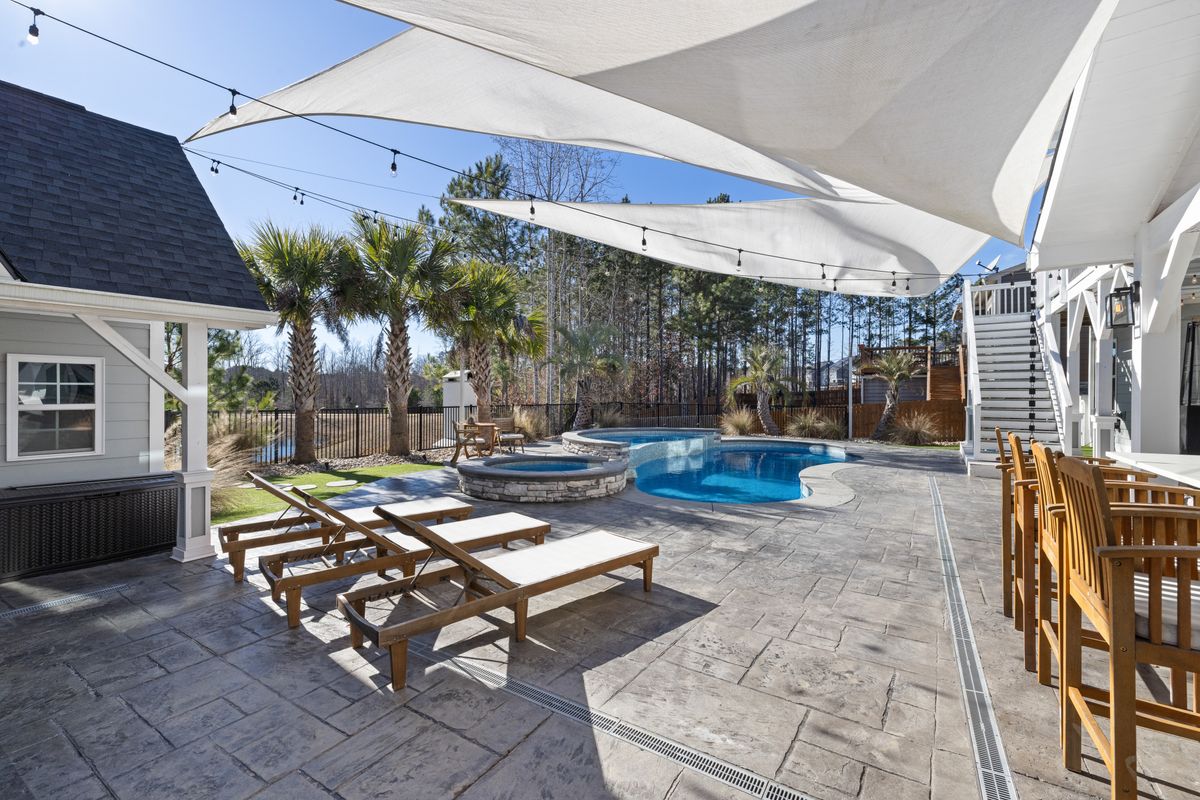
The other half of the work is not wood at all. Greenville-proper lots tend to be smaller and more irregular than the platted lots further out, and that pushes patios into shapes a suburban builder rarely deals with: narrow side yards between older houses, rear courtyards opening off a kitchen, walkout patios on the lots that drop toward the Reedy River valley, and the covered flagstone or paver terraces tucked under a second-story deck. These all collect the same Upstate film, but the cleaning has to respect what is underfoot.
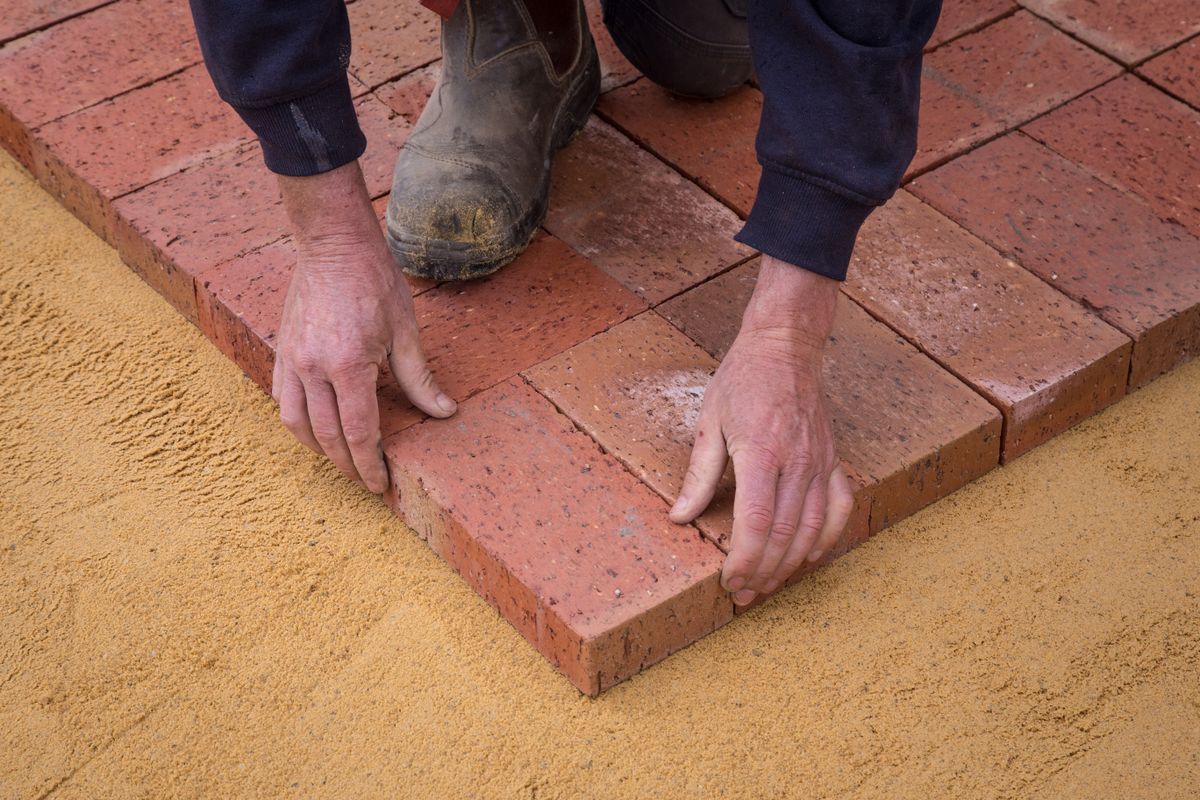
Poured concrete patios and the stamped concrete common on the newer infill clean up with a flat-surface cleaner for an even tone, and the iron in the red clay that splashes up from the beds needs a clay-specific treatment before the rinse or it just re-deposits. Flagstone and bluestone, which show up on the older courtyards, need a gentler pass because the stone is softer and the mortar joints are the weak point - too much pressure excavates the joints the same way it does pavers. Brick courtyards, common behind the older homes off Augusta Road and around the downtown edges, carry the film in the pores of the brick face and the moss in the joints, and both need treatment rather than a wand. And the paver patios on the newer side clean with the joint sand kept firmly in place, because blasting the sand out is how a level patio turns into a wobbly, weed-prone one.
Red clay is a Greenville patio problem before it is anything else
Ask a Greenville cleaner what most patio calls are about and the answer is rarely the patio itself - it is the Piedmont red clay that surrounds it. The clay is iron oxide, not loose dirt, and on a hard rain it runs off the beds and splashes onto concrete, brick and stone, drying into an orange cast that sits inside the pores. A garden hose will not move it and pressure alone tends to smear it, because the iron is bonded to the surface rather than sitting on it. We pre-treat the clay staining and let the chemistry sit long enough to break that bond before any water hits the surface, then rinse in a direction that carries the released material away from the freshly cleaned area instead of back across it. On a property with active beds that still splash, the honest note is that the clay will return with the next hard rain - the fix for that is edging or a gravel margin at the bed line, not a stronger clean.
The split-level truth about decks over crawlspace and grade
Because so many Greenville-proper homes sit on crawlspace foundations, a large share of the deck and patio work here is on decks raised a foot or two off the grade rather than at grade level. That under-deck space is where the growth problem actually concentrates: it stays damp, gets little sun and poor airflow, and collects the film on the joists, the skirting and the underside of the decking. A clean that stops at the top surface of the boards has addressed half the deck. We treat the underside and the skirting as part of the job, both because it is where the moisture lives and because clearing it stops the growth from climbing the visible faces again within weeks. On the walkout lots that drop toward the river valley the under-deck space is tall enough to be a shaded patio of its own, and it needs the same attention as the deck above it.
Cleaning and resealing are two different jobs - and the order matters
The most common mistake we see on Greenville decks is treating the clean as the end of the work. A clean returns the wood to a state ready to be protected, but it does not protect it. If you plan to stain or seal, the sequence has to be clean first, then dry, then seal - and the drying is the part people rush. A sealer laid over a deck that is still damp, or over wood that still holds a residue of the cleaning chemistry, traps the moisture and the film underneath and peels within a season. We tell homeowners to budget a day or two of dry weather between our clean and their sealer, and to let the boards read dry to the touch before anything goes on. If the deck already has a failing sealer that is peeling in patches, that has to come off before a fresh coat - and a clean does not strip an old sealer. Those decks need the stripping step done honestly rather than pretending a wash will prep them.
Fitting a Greenville-proper deck clean into the year
Greenville's calendar has two useful windows and they book up early. Late spring, once the heavy pine and oak pollen of the Upstate has finished dropping, is the best single moment to do the whole deck and patio at once, because a visit then keeps its clean look through the summer - wash mid-pollen and you are doing it again in two weeks. Early fall is the other window, and for the homes planning to reseal before winter it is the more important one, because it opens the dry stretch that lets the clean and the dry-out happen before the sealer goes on. The middle of summer works for a maintenance clean but the shade-grown film is at its heaviest then and the ground can be too dry for the runoff to drain cleanly. On the shaded lots around North Main, Augusta Road and the river valley the growth accumulates faster than on the open lots, so a deck there often needs its clean on a shorter interval even when the wood itself is in good shape.
If you want a straight number for your Greenville-proper deck or patio - flat, upfront, no surprises on the day - send a couple of phone photos of the worst areas and which direction the surface faces. From those we can read the wood or the paver type, how heavy the shade-driven film is, and whether the boards are just dirty or genuinely near the end of their life, then price it to what your surfaces actually need rather than a flat rule of thumb. Request a quote and we will lay it out for you.