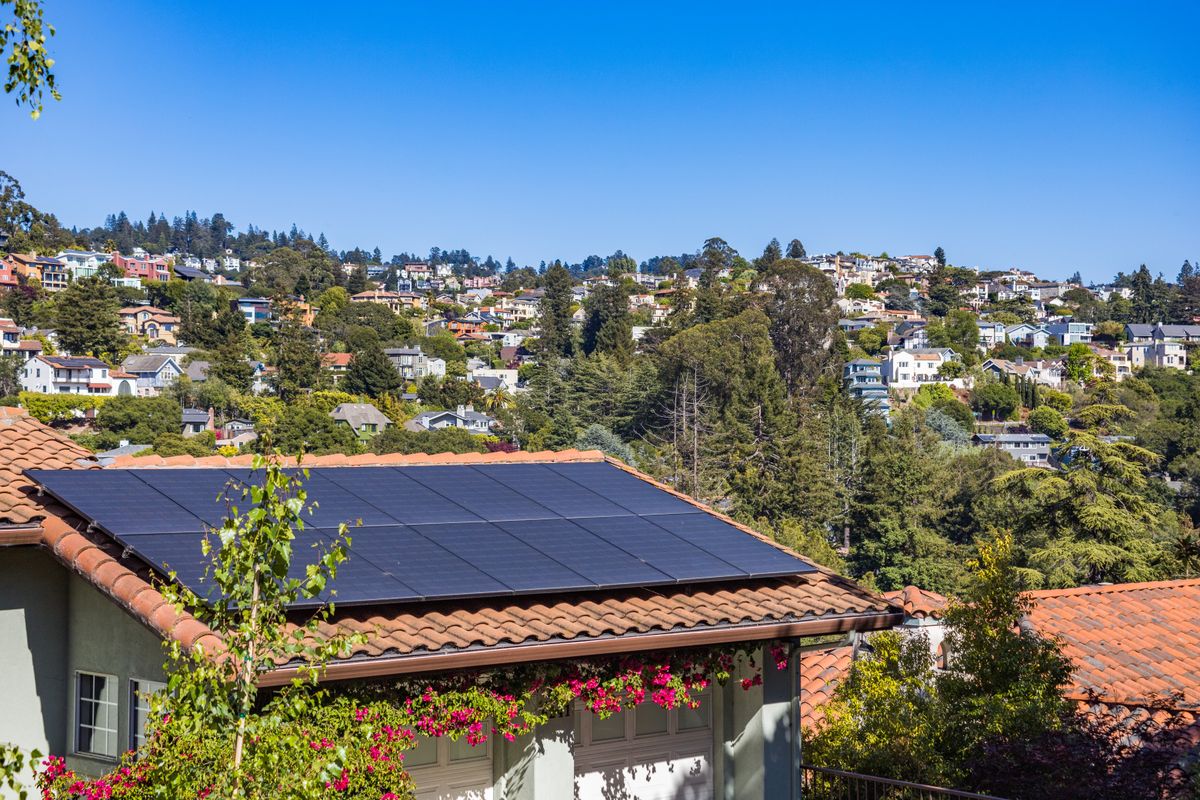
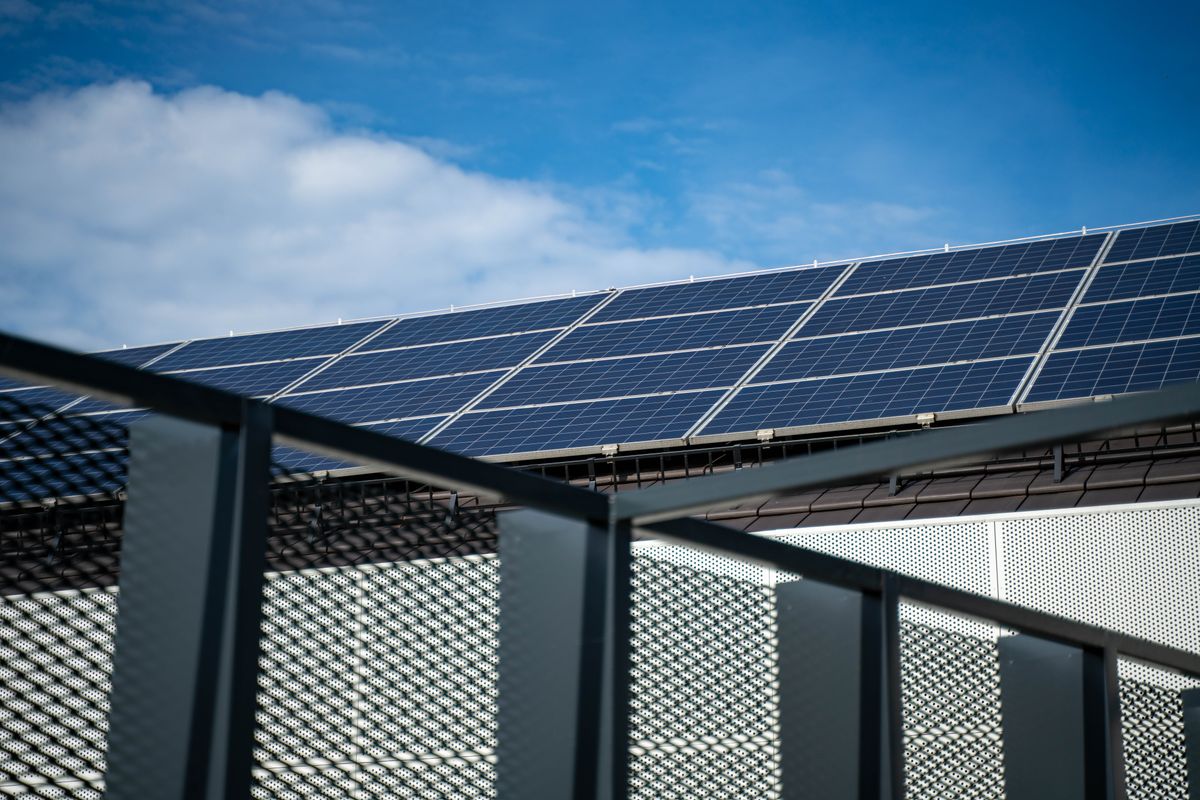
Short answer: a rooftop array in the Upstate loses real production to a film that is easy to miss from the ground, and the reason is not dust — it is what the local climate lays down and bakes on. Greenville sits at the foot of the Blue Ridge escarpment, which does two things to solar glass. It wrings moisture out of the air pushing up against the mountains, so the metro collects close to fifty inches of rain a year and heavy dew, and it puts the whole region in the path of the pine and oak pollen that blankets every surface every spring. Both feed the same slow thief: a film of pollen, red-clay fines, and organic residue that builds up cell by cell and scatters light before it ever reaches the cells. A clean panel simply converts more of the sunlight it is already standing in. This section covers what is actually on Upstate panels, when a clean genuinely earns its keep, and how the deionized-water method protects both the glass and the warranty.
What the Upstate actually puts on the glass
An array in Greenville is not fighting the same grime as one in a dry western city, and it helps to name the layers because each one behaves differently. Spring brings the heavy bloom: the yellow-green pollen from the pines and oaks settles as a sticky film that holds the next layer of airborne grit against it. All year the Piedmont red clay that fills every yard stays suspended in runoff and wind, and it splashes up off the beds onto low roof sections the same way it marks siding. And under the tree cover that shades so much of North Main, Augusta Road, Alta Vista, and the older neighborhoods, the canopy drips dew, leaf litter and organic residue onto the array all season long. None of that is the kind of problem a rainstorm solves. Rain can rinse loose dust, but it leaves the bonded film and often just redistributes it across a larger area, which is why a clean-looking array can still be losing output.
Where the array sits changes how fast it soils. A ground-mount system out toward Travelers Rest or the foothill edge picks up the heaviest pollen load because it sits in the open near the tree line. A rooftop array tucked under mature oaks in the Augusta Road side of town stays shaded and cool, which slows bonding slightly but keeps it damp and lets the film set. Newer arrays in Greer and Simpsonville, on open lots with young trees, carry a lighter but steadier mix of airborne road and construction fines. Each position produces a slightly different film, which is why we do not quote a one-size pass — we want to know what the array faces before we price it.
What a storm can and cannot remove
The single most useful thing an owner can know is that rain cleans the easy stuff and bakes the hard stuff. A light film of road dust may genuinely wash away in a good thunderstorm, which is why a clean-looking array can sit fine for months. The trouble starts when the film is thick enough that it does not rinse, or when it is left in place long enough to bond under the Upstate sun. Baked pollen and a clay-and-organic residue are not a single layer; they build up cell by cell until the whole array carries a diffusing haze. That haze does not knock the array over, but it steadily shaves the electrons the cells can pass to the junction box — and because soiling grows slowly, the loss is easy to miss on a monthly meter.
The honest rule of thumb is that resistance to rinsing is the tell. If a morning shower restores the panels' look, it was probably rinsing anyway. If the film persists through weather and leaves a streaky or chalky residue, it has bonded and needs a proper clean rather than the next storm.
Daylight recovery is the real reason, and it is often larger than owners expect
Owners call us for one of two reasons, and both are legitimate. The first is a visible film they can see from the ground — streaking on the glass, a chalky haze, or a buildup of droppings around the roofline. The second, quieter one is the one that actually pays: the production numbers on the inverter drifted down over a season and a rinse has not helped. Because soiling works by scattering or absorbing light before it reaches the cells, the lost output shows up as a steady percentage of the array's capacity every sunny hour, not as a one-off drop. Recovering that daylight is what generally makes the service pay for itself, and it is why we are honest that a panel under a heavy oak canopy, or one on a shaded lot off Augusta Road, usually gains back more than one on an open, inland roof.
We do not sell this as a miracle. An array is only worth cleaning if it is actually soiling, and the collector only recovers what the film was stealing. If your numbers are healthy and the glass looks clear, we will tell you that a clean is not due yet rather than invent a problem to book. If the film is doing real damage, that is exactly the case where a single visit can recover a meaningful share of the year's production.
The deionized-water and soft-touch method protects the cells and the warranty
Solar glass is not window glass, and the wrong cleaning approach is the one thing that can turn a maintenance job into a warranty dispute. The anti-reflective coating on the cells is engineered for light transmission, not for abrasion. High pressure from a pressure-washer wand can force water under the panel frames and scratch the coating, and abrasive pads or harsh chemicals can do the same to the glass and the seals. That is why we clean the way the manufacturers write for: purified, deionized water so nothing is left behind when it dries, soft brushes and low-pressure tools that lift the film instead of grinding it, and no step onto the array and no wand at the junction boxes or wiring. We work carefully around the mounts, the inverters, and the cable runs so the panel itself, and the roof beneath it, are never at risk from the cleaning.
This matters doubly on a tile or two-story roof. On the older tile and architectural-shingle roofs common around North Main and the historic districts, the equipment has to be handled with the same care as the panels, because cracked tile is its own expensive repair. And on any roof, a misstep onto the panel face from someone who does not work on them regularly is exactly the kind of damage that voids coverage. Gentle, low, and deionized is not a faster pitch; it is the method that does the job without the repair bill.
How often, realistically, and when it is worth doing at all
Cleaning frequency here does not follow one fixed calendar — the honest range is narrower than most owners assume. A panel in an open position, lightly soiled, may be fine with one clean a year or every other year. An array under a heavy oak canopy, or one carrying a steady pollen-and-clay load, usually wants one clean a year — and sometimes sooner if the inverter shows production slipping before that. The cheapest version of this work is the regular one: film that has not bonded comes off gently and cheaply, while soiling that has sat through several pollen seasons takes more product, more care, and more time to lift.
We would rather be straight than book you into a cycle you do not need. If you live on an open lot, the array faces the sky clear of canopy, and the production numbers are steady, a clean every couple of years is defensible. If you are under oaks, on a shaded Upstate lot, or the numbers have drifted, that is when the visit earns its keep. Send us a photo of the array and any inverter readout you have and we will tell you which case you are in before we schedule anything. If the crew is already working on the roof edge, the solar pass slots into the same visit as a house wash or a roof treatment without a second call-out — one truck, one trip, and the array back to its rated output.